Learnings
-
Why study the Classics?
Classics can be split into 3 main categories: philosophy, poetry and oratory. Latin as a language was the main language of literature until the 16 th century with much of European history being studied through literature written in Latin. Examples… Continue reading

-
Atlas: More than the man that holds up the sky?
Atlas was a Titan condemned to hold up the heavens for eternity after the Titanomachy – the ignominious defeat of the Titans to the Olympian gods led by Zeus and his allies. However, Atlas does not simply disappear from the… Continue reading

-
Augustus: The First Emperor
A presentation on Augustus – Rome’s first emperor and the architect of its Golden Age. Continue reading

-
The Battle of Thermoplyae
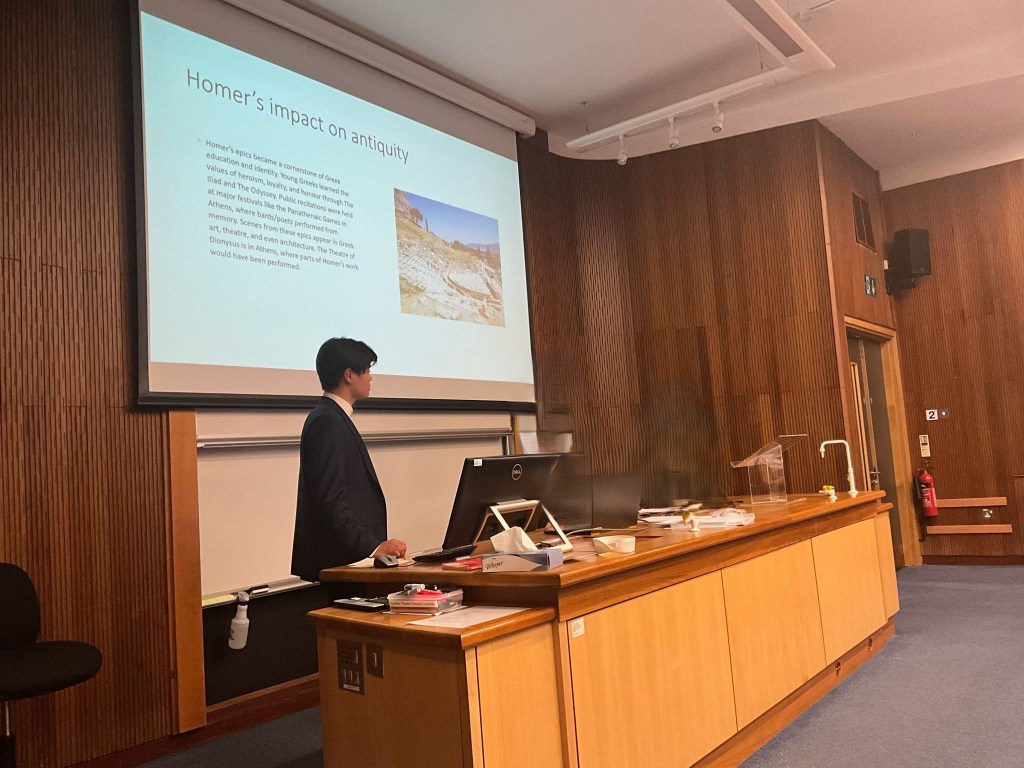
A presentation that I gave to a group of year 10 students coming from Langley Academy, Slough along with 2 other peers. Continue reading
-
Catullus: The Poet Who Made Passion a Philosophy
Recently, I studied the Roman poet Catullus – a writer whose work feels startlingly modern despite being over two thousand years old. He lived during the late Roman Republic, around the same time as Caesar and Cicero, but his poetry… Continue reading

-
Opinion: Cicero
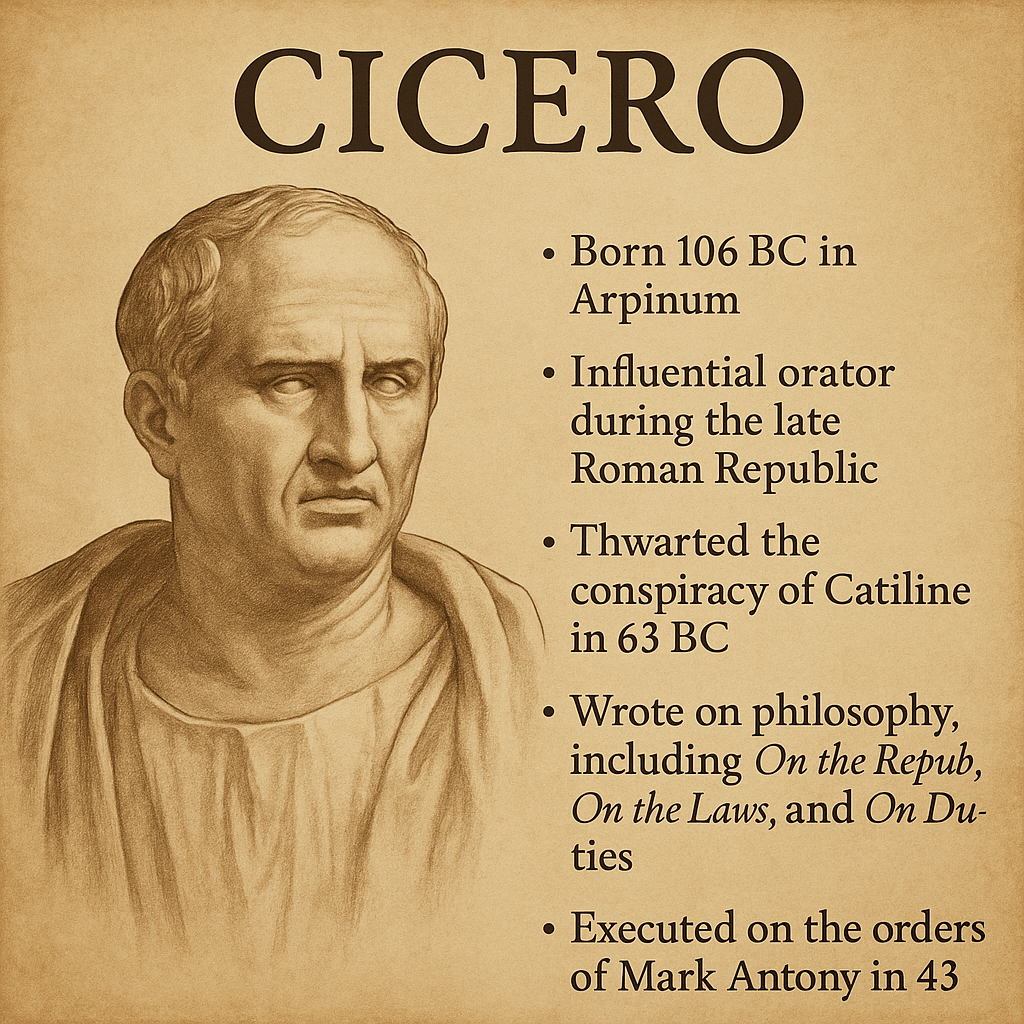
Lately, I’ve been studying Cicero, one of the most fascinating and complicated figures of the late Roman Republic. He wasn’t a general or a nobleman, but a statesman, philosopher, and orator whose words shaped Rome’s politics and intellectual life –… Continue reading
-
Alexander the Great: The Conqueror Who Became a Legend
Often considered the greatest military leader of ancient history, Alexander III of Macedon, better known as Alexander the Great, was born in 356 BC, the son of King Philip II of Macedon. His family claimed divine descent from Zeus, and… Continue reading

-
The Aeneid: Virgil’s Epic of Empire
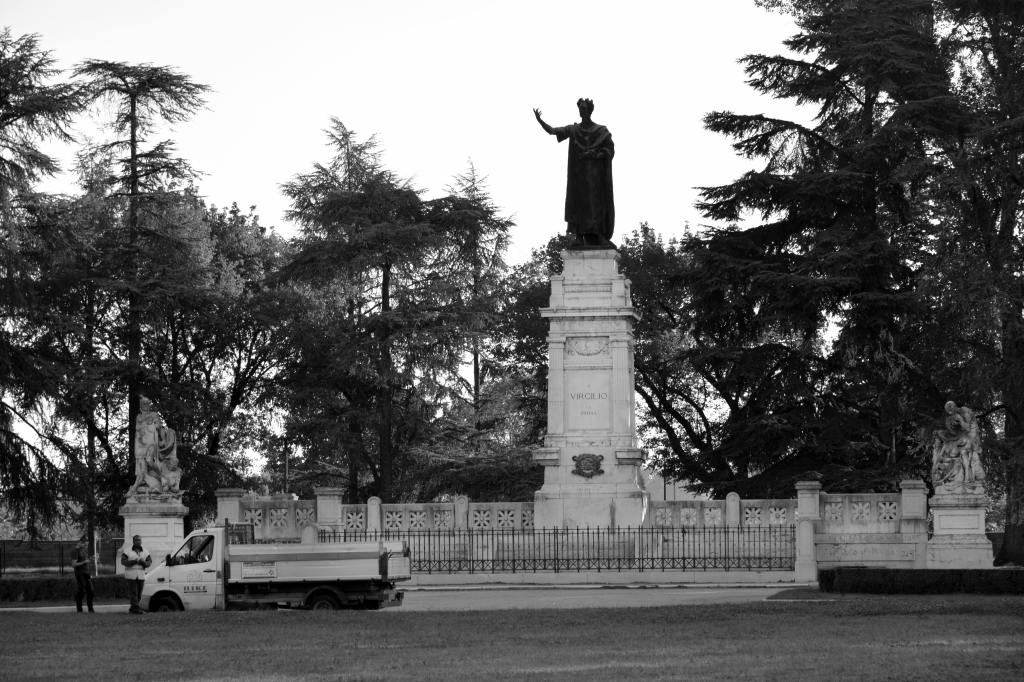
The Aeneid is Virgil’s monumental Latin epic, written between 29 and 19 BC under the reign of Augustus. It tells the story of Aeneas, a Trojan hero who escapes the burning city of Troy and, after years of wandering, becomes… Continue reading
-
Julius Caesar: Rise, Rule, and Ruin
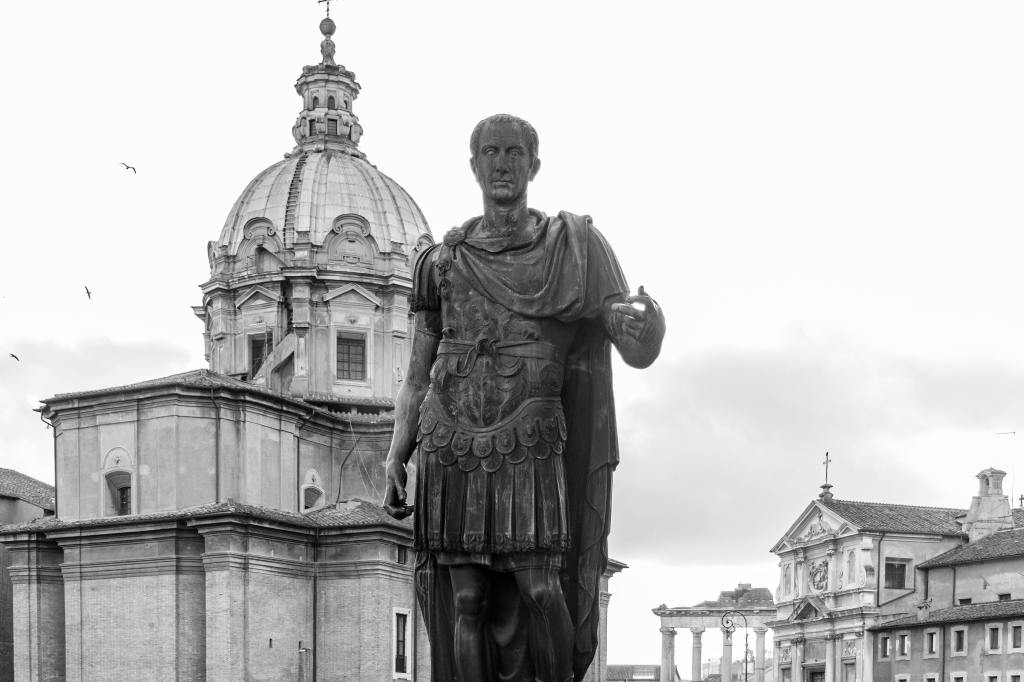
A brief presentation I gave to younger students, introducing the life and legacy of perhaps the most famous general in history. Continue reading
-
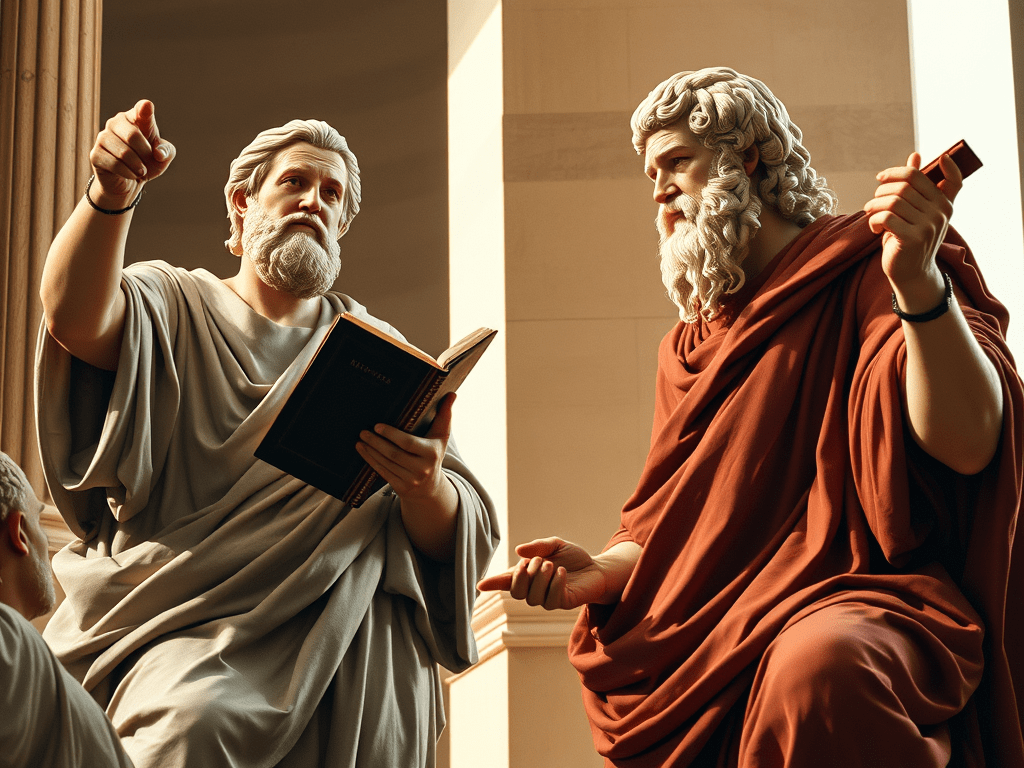
Contrasting Philosophies: Plato vs. Aristotle Explained
To determine whether Plato and Aristotle wrote for fundamentally distinct worlds, we must first analyse the motivations behind their respective tones, assess how external factors shaped their philosophies, and clarify what the “worlds” in question represent. An important starting point… Continue reading
 ClassicsForEveryone