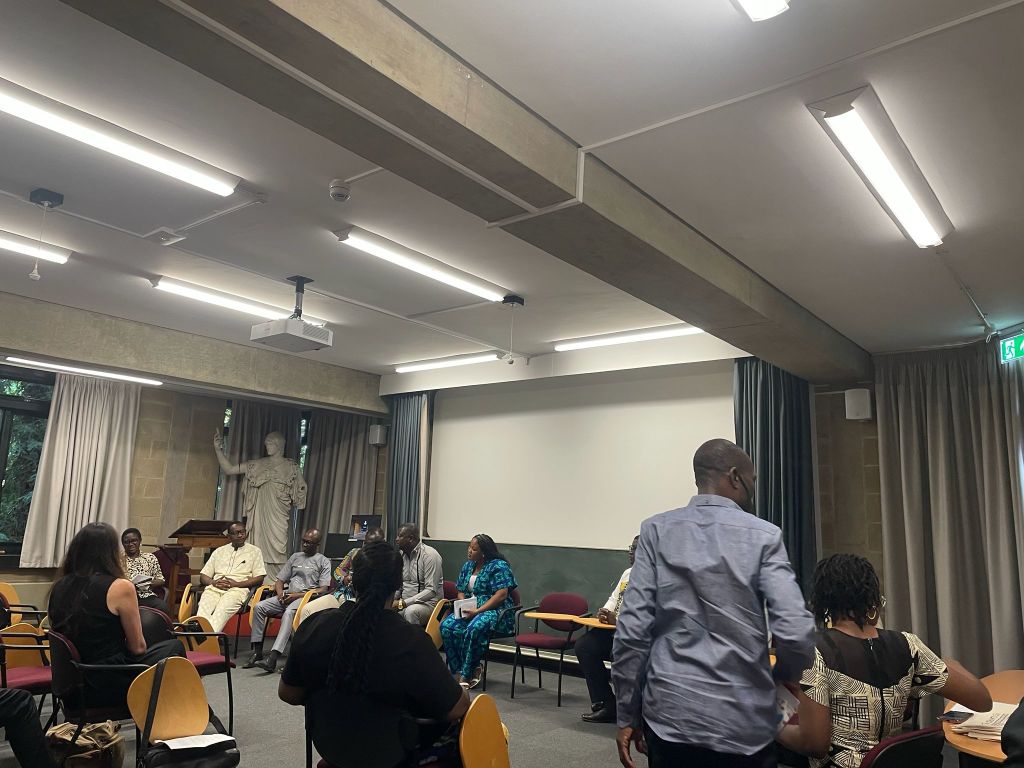
I recently attended one of the most fascinating events I’ve ever been to – a gathering of classicists, historians, and thinkers from all over the world (every continent except Antarctica, sadly). I’d spoken to some of these people before in interviews, but finally meeting them face-to-face made the whole experience feel real.
The theme running through the event was bold and refreshing: what does it mean to study the Classics, Greece, Rome, and everything in between, from an African or global perspective? It wasn’t just academic talk. It was about taking an ancient subject and asking, “Who gets to tell this story now?”
Scholars from across Africa are reshaping how we think about the ancient world. Some are comparing African philosophy with Greek thought, or looking at mythology through both lenses — Medea and her African counterparts, Antigone and the politics of rebellion, goddesses and modern feminism. Others are building Classics clubs in schools, or writing new works that connect African identity with classical philosophy and history.
One of the most thought-provoking discussions I heard focused on Medea and the idea of women’s rage. In ancient plays, women are often powerful but punished for it. Someone compared Medea to a less cruel African figure, sparking a debate about gender, purity, and power. There was even a comment about how, in ancient Greece, divorce could be seen as an act as shameful as killing your children – a dark reflection of how women’s lives were controlled by male expectation. The conversation turned to how these old themes – concubines, sexuality, social control – still echo in modern society.
There was also some heated discussion about whether the Classics should be “modernised” or kept rooted in their Greek and Roman origins. Some argued that making the field contemporary risks watering it down; others believed that connecting it to Africa’s intellectual traditions only makes it stronger. Both sides agreed, though, that the discipline can’t survive without relevance.
What I found most inspiring was the sheer variety of perspectives. Some scholars are using geopolitics and postcolonial theory to rethink empire. Others are exploring gender, literature, tragedy, and patronage – linking figures like Horace or Sophocles to today’s social questions. There’s a real effort to “Africanise” the Classics, not by rejecting its roots, but by expanding its meaning and reach.
By the end, I realised how alive this field really is. The Classics aren’t locked away in ancient texts; they’re part of a global conversation. Seeing people from so many backgrounds reinterpreting the same stories reminded me why this subject still matters. The ancient world might be old, but the way we understand it is constantly being rewritten – and right now, Africa is adding some of the most exciting chapters.
 ClassicsForEveryone